Three founders, three MVPs, three very different bills. Last quarter I watched one team burn $28,000 on a "minimum" product that took five months, while a solo founder I know shipped a working MVP in eleven days for under $600 in cash. Same category. Same ambition. The difference wasn't talent—it was how they treated scope and where they spent the money.
Building an MVP on a tight budget isn't about being cheap. It's about being ruthless. Most founders don't fail because they lacked cash. They fail because they spent it on the wrong 40% of the product. This piece is about the other 60%, and how to get your idea in front of real users without writing a check you'll regret.
Key Takeaways
- A lean MVP usually lands between $500 and $8,000 in real cash if you scope hard and lean on no-code or a single freelancer.
- Scope is your biggest cost lever—cutting features saves more than cutting quality.
- Most MVPs should ship in 2 to 6 weeks, not months.
- Web first. Mobile doubles your cost for zero extra validation.
- Budget for marketing and tooling, not just code—it's where founders quietly overspend.
- Define your validation threshold before you build, not after.
How much does it cost to build an MVP?
Honest answer: anywhere from a few hundred dollars to over $50,000, and the range is that wide because "MVP" means nothing precise until you attach a scope to it. A custom-built MVP from a development agency typically runs between $8,000 and $35,000 with a fixed-scope build, and a handful of agencies will start lower. Founders who go the no-code or single-freelancer route routinely stay under $5,000.
What most cost breakdowns skip is the invisible line items. Here's how a realistic lean budget actually splits:
| Line item | Lean (no-code / solo dev) | Mid (agency, fixed scope) |
|---|---|---|
| Design | $0–$300 (template) | $1,500–$3,000 |
| Development | $0–$2,500 | $6,000–$20,000 |
| Hosting / infra | $10–$50/month | $50–$200/month |
| Tools & SaaS stack | $30–$100/month | $100–$300/month |
| Legal / incorporation | $0–$300 | $500–$1,500 |
| Initial marketing | $200–$1,000 | $1,000–$5,000 |
My rule of thumb: whatever your first estimate is, halve the features and double the timeline. Founders consistently underestimate both. I've watched it happen to people who should know better—including me.
What does "MVP cost" actually mean?
The term gets thrown around as if it were a single number. It isn't. "MVP cost" really means the total cash you spend before you have enough evidence that people want what you're building. That includes code, yes. But it also includes the landing page you ran for two weeks, the customer interviews, the ad spend that proved demand, and the subscriptions you forgot to cancel. When I talk about MVP cost, I mean the cost to reach your first real signal—not the cost to finish a feature list.
That reframe matters because it changes what you cut. If the goal is a signal, half your backlog becomes optional.
How long should an MVP take to build?
If your MVP is going to take four months, it's not an MVP. It's version one of your dream, and your budget will bleed out before you learn anything useful. A genuinely minimal product should reach a real user in two to six weeks.
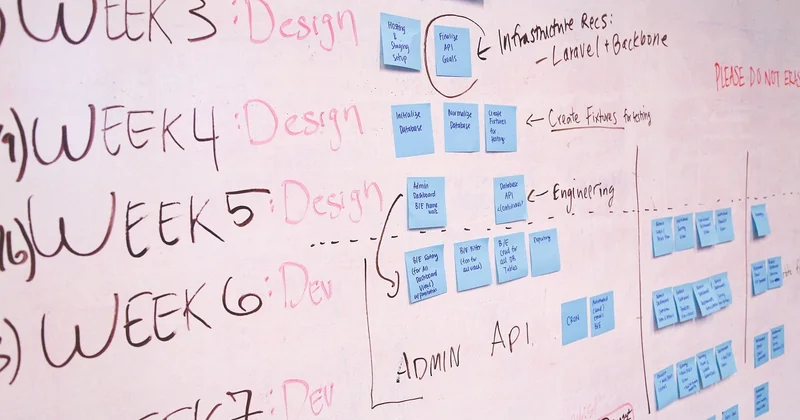
Here's the pattern I've seen repeatedly: the build itself fits in a few weeks. The scope creep adds the rest. Every founder negotiates with themselves—"just one more feature"—and each negotiation adds days. Three weeks becomes three months without anyone noticing.
- Week 0: Talk to 10 potential users. Write down what they actually complain about.
- Week 1: Ship a landing page with a signup button. Measure intent.
- Weeks 2–4: Build only the one workflow that solves the loudest complaint.
- Weeks 5–6: Put it in front of paying or committed users.
Anything beyond that is you avoiding launch. Which brings up an uncomfortable point—the reason MVPs get expensive is usually fear, not complexity.
How can I build an MVP for my idea?
Start by writing the single sentence your product exists to answer: "This helps [who] do [what] faster/cheaper/better." If you can't fill that in without a comma-spliced mess, you don't have a scoped idea yet. Everything downstream depends on that sentence being tight.
The order matters more than the tool choice. Here's the sequence that has worked for me and for the founders I've mentored:
- Interview 10 people who fit your target. Ask what they do today to solve the problem. If nobody's hacking around it with spreadsheets, the demand is likely thinner than you think.
- Build a landing page this week. One headline, one benefit, one button. Run a small ad test, even $50 worth, and watch what happens.
- Pick your build path deliberately—no-code, freelancer, or the smallest possible agency engagement.
- Launch to a private group before a public one. Feedback from five committed users beats applause from a hundred curious ones.
- Set a kill criterion. If signups don't hit X, or if paid conversion stalls, change direction rather than building more features.
Number five is the one everyone skips. I skipped it on my first project and pushed three extra months into a product nobody wanted. That was $4,100 of tooling and freelance work that produced exactly zero users. The lesson stuck.
Build it yourself, no-code, or pay an agency?
Depends on three things: your technical ability, the product's complexity, and how much of your budget you're willing to gamble on speed. Here's how I'd decide:
| Path | Best when… | Watch out for |
|---|---|---|
| No-code (Bubble, Webflow, Airtable-backed) | You're non-technical, the workflow is form-driven, and you need a signal within weeks | Hitting platform limits once you scale past validation |
| Solo freelancer | You have a clear spec and can review code, or can find someone to | Scope creep, variable quality |
| Agency, fixed scope | Speed matters, the product is genuinely complex, and you can afford a deposit | Quotes that hide the discovery phase |
| Build it yourself | You code, and shipping is more valuable than polish at this stage | Perfectionism—it will eat you alive |
My bias is clear: for most first-time founders, no-code is the correct default. I'll defend that position without hesitation. The whole point of an MVP is to test an assumption, and no-code tests it faster and cheaper than anything else available. You trade future flexibility for present clarity—and clarity is the thing you need this week.
Where tight budgets quietly leak
Development is rarely the culprit. The leaks are everywhere else:
- Redundant subscriptions. Three tools that do the same job because each was easy to trial. That's $80–$150/month that never shows up in your project plan.
- Mobile before web. Launching on iOS and Android doubles development and triples testing time. Ship web first.
- Marketing afterthoughts. Founders often forget that reaching users can cost more than building the product. Budget for it upfront.
- "Cheap" builds that cost twice. The $1,500 freelancer who disappears and the $900 tool that breaks at scale both end up costing more than doing it properly the first time.
Non-attributed reality: most founders I've spoken to spend somewhere between 40% and 60% of their MVP budget on things that weren't code. That's the leak nobody talks about.
The honest truth about tight-budget MVPs
A tight budget is not a handicap. It's a forcing function. You can't hide behind endless features, so you have to face your assumptions earlier—usually faster than founders with $50,000 to lose.
What you'll actually learn, if you do it right, isn't whether your product works. It's whether the problem you're solving is worth someone else's money. That answer is worth far more than the code.
So here's the question worth sitting with: if your MVP had to ship in three weeks and cost under a thousand dollars, what would you cut first? Whatever your answer is—that's probably your real product. The rest was decoration.